Cost £20

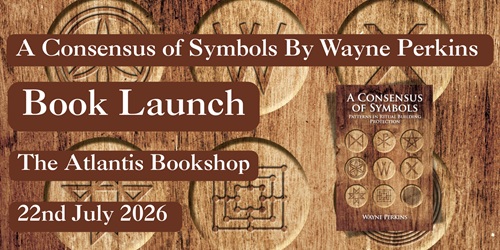
We are delighted to be hosting Wayne Perkins, author of “A Consensus of Symbols: Patterns in Ritual Building Protection” for an illustrated talk to commemorate the launch of his new book, which is a collection of archaeological essays surveying the presence of magical ritual artefacts in the ancient buildings of Britain. Built on nearly four decades of research, this fascinating anthology is a vital guide to understanding the ways in which British householders used magic and ritual to protect their homes from perceived or spiritual threats.
Exploring both symbols (such as graffiti) and deposits (such as concealed objects), A Consensus of Symbols is an essential text that unravels many of the mysteries which have shrouded the academic discourse surrounding ritual building protection: who created the ritual markings? What concerns and intentions lay behind this use of ritual? Was magic intentionally evoked through these symbols and deposits, or were they simply ‘good luck’ charms?
Answering these questions and more, Wayne Perkins begins the book with a discussion on the socio-economic, political, and cultural contexts of the ritual building phenomena. This is followed by useful exploration of the supernatural beliefs which permeated the Early Modern Period, including a brief outline of the Laws of Sympathetic Magic.
The following essays include intriguing and engaging observations on apotropaic graffiti; ritual taper burn marks; deliberately concealed old boots and shoes; spiritual ‘middens’ or caches; dried, mummified and smoked cats; witch bottles; and much more!
A Consensus of Symbols is not only a clear and accessible guide to understanding the strange and engrossing world of ritual building protection, but it will also empower both the individual and the local history groups to undertake historical and archaeological surveys of their own.
Author Biography
The author is an archaeologist with more than twenty-two years of experience who undertook his degree in archaeology at the University of Birmingham. He began his career as a field archaeologist with Oxford Archaeology.
Anticipating a career in France he volunteered on excavations for Poitiers and Rennes University respectively. In due course he worked for France’s premier scientific organisation,
I.N.R.A.P. (Institut Nationale des Récherches Archéologiques Préventives) for five years.